It may be small as a pebble or as big as a mountain.
Is granite crystal or grain size.
A coarse textured granite cg exhibiting pluri millimetric sized crystals and fine textured granite fg exhibiting infra millimetric sized crystals were identified fig.
In smaller intrusions such as sills and dykes medium grained rocks are formed crystals 2mm to 5 mm.
Some granites may contain a sprinkling of larger crystals phenocrysts within an otherwise coarse and even grained rock.
These properties have made granite a widespread construction stone throughout human history.
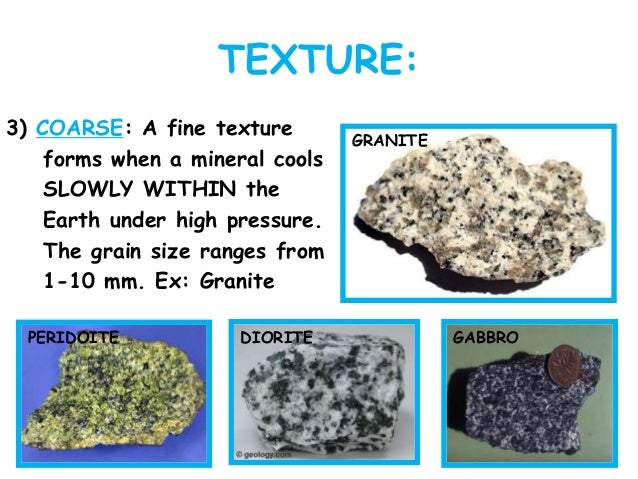
Granite has a crystalline texture of interlocking mineral grains ranging from 1 5 mm figure 3.
The grain size is coarse enough to allow recognition of the major minerals.
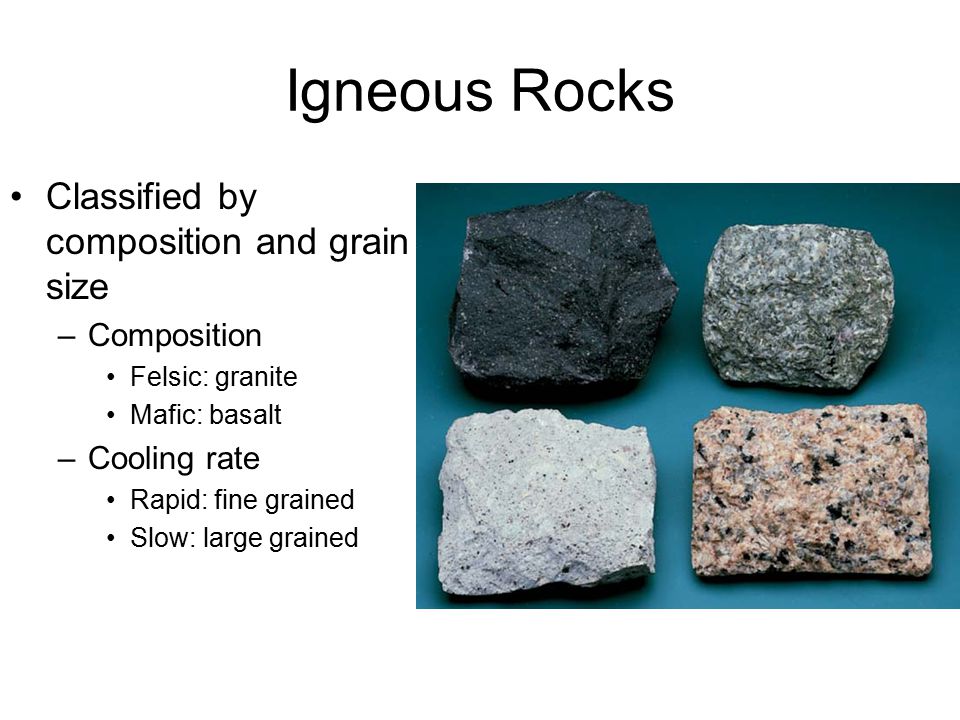
They are the same in every thing but grain size and location of crystallization.
It is about two inches across.
Granite is nearly always massive hard and tough.
Crystals have more time to grow to larger size.
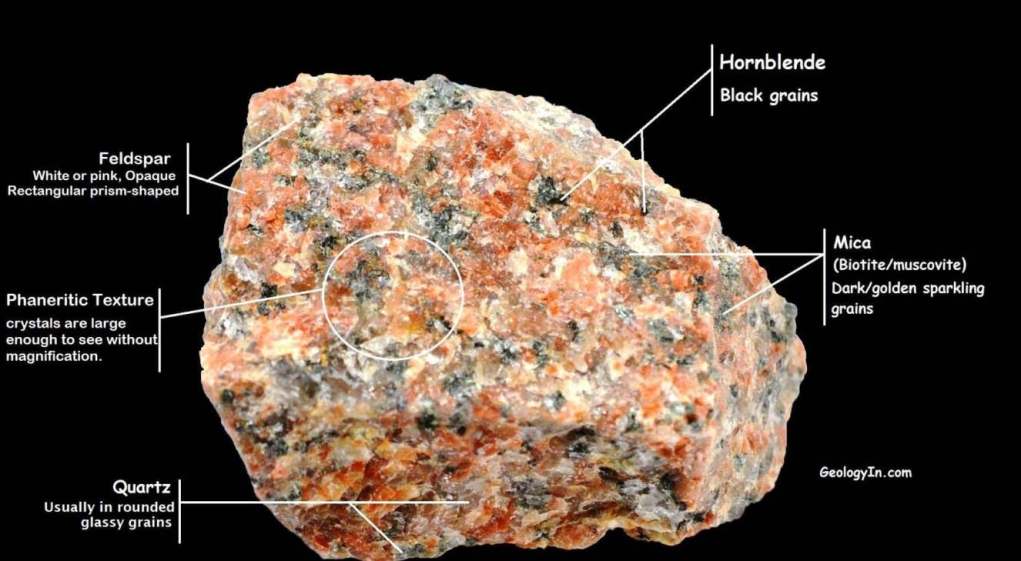
The specimen above is a typical granite.
Numerous other minerals can be present in granite.
Granite has poor.
In large igneous intrusions such as batholiths coarse grained rocks are formed with crystals over 5mm in size.
It is able to grow large crystals due to being an intrusive igneous rock.
The average density of granite is between 2 65 and 2 75 g cm3 its compressive strength usually lies above 200 mpa and its viscosity near stp is 3 6 1019 pa s.
The pink grains are orthoclase feldspar and the clear to smoky grains are quartz or muscovite.
Granite s crystal size varies from 1 mm to 10 mm compare and contrast granite and rhyolite.
The black grains can be biotite or hornblende.
However granite is said to be phaneritic in texture which means that the crystal sizes are large enough.
Usually the grains are randomly arranged with no regular bands or layers.
It is strongly reduced in the presence of water down to 650 c at a few kbar pressure.
Granite does not have a specified size.